Tag Archive | "anatomy"

Leslie Kaminoff Beyond Basic Yoga, Anatomy and the Breath


Bookmark and Share

With 30 years experience in yoga, breathing and anatomy Leslie Kaminoff joins us to share his wealth of knowledge.

The co-author of the must have resource for yoga instructors Yoga Anatomy and founder of The Breathing Project shows how a knowledge of the mechanics of the body leads to a deeper, more profound yoga practice and life experience. Leslie demystifies the complex workings of the body and the breath, putting topics into terms which are refreshingly accessible and applicable. Gain insights which will powerfully shift your personal mind-body experience and the way you teach yoga from how to avoid common stress injuries from yoga to exploring the breathing body.

Original Air Date: September 12, 2011

Audio clip: Adobe Flash Player (version 9 or above) is required to play this audio clip. Download the latest version here. You also need to have JavaScript enabled in your browser.

Connect with Leslie via Facebook, Twitter and The Breathing Project. Check out his training course at YogaAnatomy.net.

Access our extensive library of interviews with leaders in the yoga and mindfulness community on iTunes. Guests include John Friend, Faith Hunter, Waylon Lewis, Dr Daniel Siegel, Sadie Nardini and many more.

1 person likes this post.

Posted in breathing, interviews, yoga basicsComments (0)

Good Posture Vital for Kids and Teens


Bookmark and Share

“Stand up straight!”

We’ve all heard it, maybe even said it. But what does it mean? Most often the response is tensing the muscles, sticking the chest out and pulling the head back. WRONG! The spine has two natural curves (called double C or S curves) which help to maintain balance, allow movement and absorb shock (like springs). When you stand up straight you need to allow these natural curves to do their work. As you do so, your posture, muscle tone and overall health will improve.

Why Bother with Good Posture

  1. Poor posture looks bad – slouching conveys a lack of interest, energy and vitality
  2. Poor posture is unhealthy – bad habits can cause problems with joints, muscles, the spine & internal organs
  3. Good posture commands respect – carry yourself with confidence and others will look to you as a leader
  4. Good posture feels better – optimism, good health and positive self esteem result from working with the body instead of against it

mountain pose

Standing Tall: Discover the Mid-line

Properly performing mountain pose is the first step to improving and maintaining good posture.  Your aim is to learn about the mid-line of the body which divides the body into front and back, left and right. For most individuals this means

  • standing a little more onto the front of the foot instead of resting the weight back on the heals
  • allowing the hips to become level by balancing equally on both feet
  • engaging the core muscles to support the spine
  • leveling the shoulders to form a T with the spine
  • imagining the crown of the head lifting up as if attached to a helium balloon

When first learning how to stand up straight it is sometimes helpful to use a full length mirror to visually reinforce what level looks and feels like. Numerous other yoga poses are fantastic for improving posture. Check out the Alphabetical List of Poses for more information.

StraightenUp has this poster with easy to do exercises for kids which help promote good posture.

Sitting Tall: Wow, Sitz Bones

boat pose final position

One pose that is extremely helpful to teaching good posture when sitting is boat pose. Whenever I teach this pose, the students and I discuss sitz bones (ischial tuberosity), those boney protrusions on the bottom of the pelvis, and how they differ in purpose with the tail bone (coccyx). It’s important to sit on your sitz bones, its what they were made for, not on your tail bone, to maintain proper curves of the spine, allow the internal organs space to function, permit full use of the lungs, and lengthen the hamstrings.

An easy way to discover your sitz bones is to sit on the floor with your feet in front of you, legs bent, hands on knees. Extend your spine and lift your chest. You are now on your sitz bones. Roll back so that you are sitting on your tailbone. Roll forward and feel your sitz bones ‘click’. Repeat rolling back and forth until you are aware of how it feels to sit on your sitz bones.

If you enjoyed this post be sure to subscribe (RSS or e-mail) to continue to receive hints and tips on healthy living for children and teens.

Be the first to like.

Posted in benefits, yoga basics, yoga for a specific body partComments (0)

Human Body Detectives Review and Give Away


Bookmark and Share

Learning about the body is fun! That’s the message Dr Heather Manley, a naturopathic physician based in Hawaii, is sharing with kids, parents and teachers.

Recently Manley sent me a copy of Battle with the Bugs, the second audio story and workbook in the series of Human Body Detectives. Each story takes Marrin and Pearl, characters based upon and voiced by Manley’s daughters, on health mysteries where they are magically transported into the body on an adventure.

With each audio CD comes a workbook full of crosswords, games, puzzles, jokes and stickers. My children immediately gravitated toward the stickers and colouring pages, while I had to gaffaw a few times at the corny jokes.  For example:

  • “What do you call a germ who wants to have a good time? A FunGi (a fun guy)
  • “What did the left eye say to the right eye? Between us something smells.” 

I was most impressed that Manley didn’t simplify terminology (how many children’s books do you know that use the word ‘macrophage?’), but provided real information in a kid friendly manner. And don’t be surprised if the adults in the room also learn a thing or two about how the body works. Here is a teaser of the book for your enjoyment.

If you are looking for a fun, creative resource where children are teaching children in an engaging way, you’ll want to get your hands on these great books. They can be found at Human Body Detectives and on Amazon.

I can’t wait for the release of The Heart Pumping Adventure, Marrin and Pearl’s third adventure into the human body, due out this spring.

Dr Heather Manley has generously donated a copy of Battle with the Bugs to one lucky Yoga In My School Reader. Leave a comment below to enter into the draw.

Extra entries:

Email this post to 3 deserving friends and cc: donna@yogainmyschool.com.

Contest runs through April 30, 2010. Good luck.

Be the first to like.

Posted in curriculum applications, give aways, products-kidsComments (7)

Yoga Helps Kids and Teens Learn Anatomy


Bookmark and Share

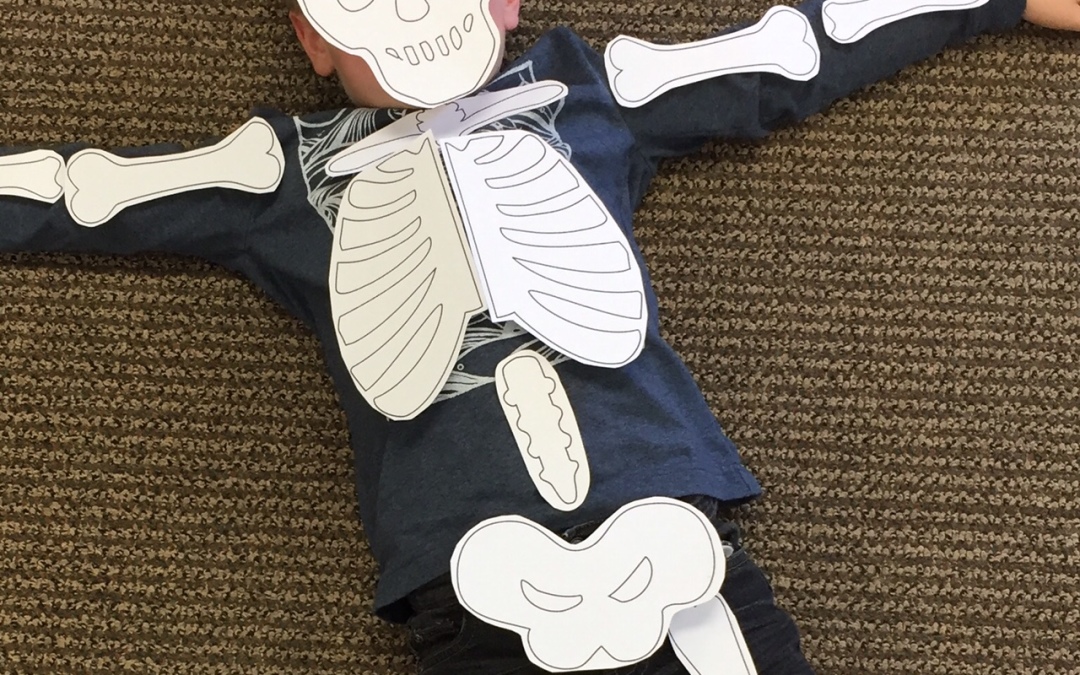
Whenever I teach yoga to kids and teens I talk anatomy. What part of your body is working in this pose? Can you feel that in your abs? Which part of your body do you use when your breathe? are all standard questions even for Pre-School and Kindergarten aged students. I keep the questions and discussions age appropriate realizing that 5 year olds and 15 year olds have different frames of reference and comprehension levels.

I am a firm believer in being familiar with the body in order to understand how to best keep it healthy and happy. As individuals come to understand and appreciate the many functions their body performs, they are better prepared to take care of it. For example, understanding that a complete breath begins in the abdomen, permits the diaphragm and ribs to perform their functions, assists in getting adequate oxygen into the body, and helps reduce stress.

Knowledge of anatomy brings consciousness to yoga practice and helps individuals talk about their body without embarassement. In fact, recently I taught a group of 20 teenage girls about mula bandha or Root Lock. You should of seen them all blush. It was great! We’ve all got these parts, we’d better know what they do and how to take care of them in order to use them properly, avoid injury, and maintain good health.

Here are a couple on-line resources to help reinforce the topics and activities from yoga class which teach kids/teens anatomy.

Anatomy for Kids

A complete site with movies, word finds, online quizzes and activities is How the Body Works on KidsHealth.com. Kinetic.com also has a fun anatomy game called InnerG where body parts (ie: liver, heart, teeth, blood, etc) need to be placed into the body. As you do so, supporting information and recipes to keep that part strong and healthy are provided. My seven year old daughter thoroughly loved testing these sites out.

Anatomy for Teens

For Jr and Sr High School students more detailed anatomy learning games can be found at Anatomy Arcade with Whack-a-Bone and Poke-a-Muscle, among numerous others. The top level of these games are challenging and a great interactive way to learn anatomy. If you really want to get into anatomy including reviews of  iPod and iPhone apps, dissection videos, and learning inter-actives visit Think Anatomy.

During your next yoga class with kids/teens be sure to take the time to teach anatomy whether for basic understanding or more in depth comprehension of how the body works. Its quite a miraculous thing. How do you teach anatomy to your students?

Be the first to like.

Posted in curriculum applications, yoga basics, yoga in schoolComments (5)


Yoga Cart

Your Yoga Cart is empty

Categories

Top Yoga Blog