Tag Archive | "challenge"

Useful and Fun Yoga Games – Yoga Jenga


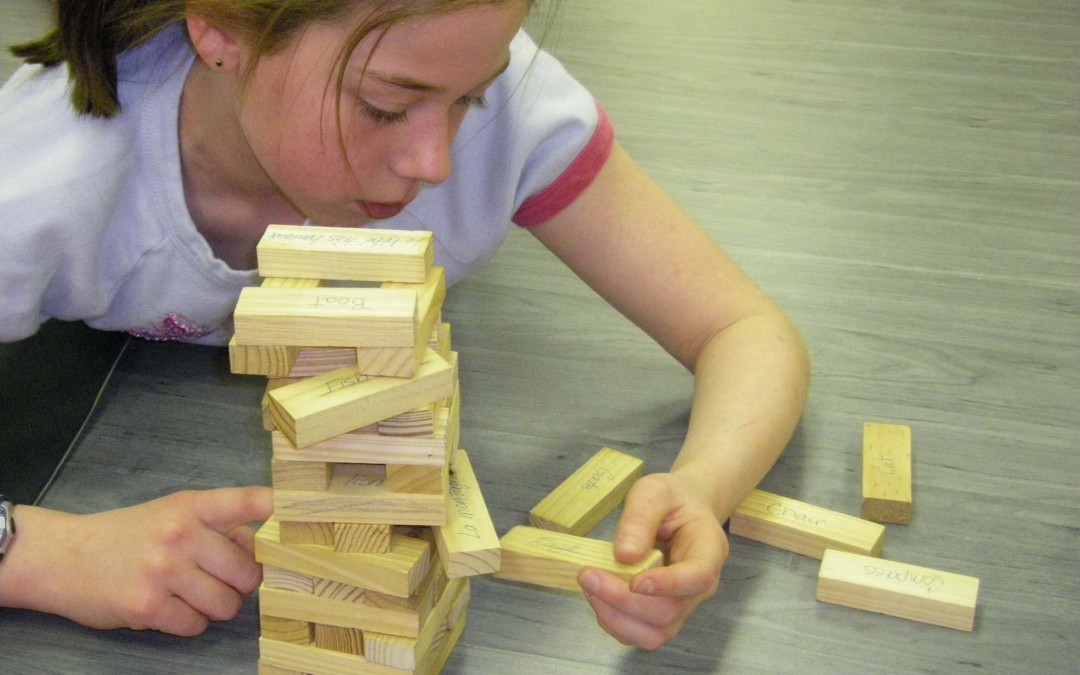
Most of us are familiar with the game of physical and mental skill called Jenga where a number of wooden blocks are stacked in a tower and each player must try to remove one block per turn using only one hand without toppling the tower. Adding a yoga element to this classic game is a sure fire hit to include in yoga class. It maintains interest, can be used with any sized group, helps kids learn how to take turns, improves hand eye coordination, instills patience, and is easy to use again and again with endless variety.

Yoga Jenga

Take a jenga game and write a different pose on each block. I took inspiration from the 60 poses included in Once Upon a Pose writing the English pose name on one side and the French name of the other thereby creating a bilingual game (the name in Sanskrit, Spanish, German, etc. would be equally as effective – See Language Learning Thru Yoga).

Have a couple of kids set up the game by stacking three blocks across three blocks until a tower is formed.

Choose a child to carefully remove a jenga block.

Perform the yoga pose written on the block.

You can place the block back on to the top of the jenga tower in order for it to continue to build. If you don’t want to repeat any poses during the class simply place the used jenga blocks off to one side. As well we more often than not simply run out of time long before the tower comes down.

Choose another child and repeat until all children have had a turn, class is over, or the tower falls over.

Visit the Yoga Games page for more engaging yoga activities to use in your class. Also join us on Facebook and check out our YouTube Channel where there is always lots of great content to keep your kids and teen yoga classes fun and inspiring.

Posted in fun, kids, teens, yoga gamesComments (3)

8 Dirty Truths About Teaching Kids Yoga
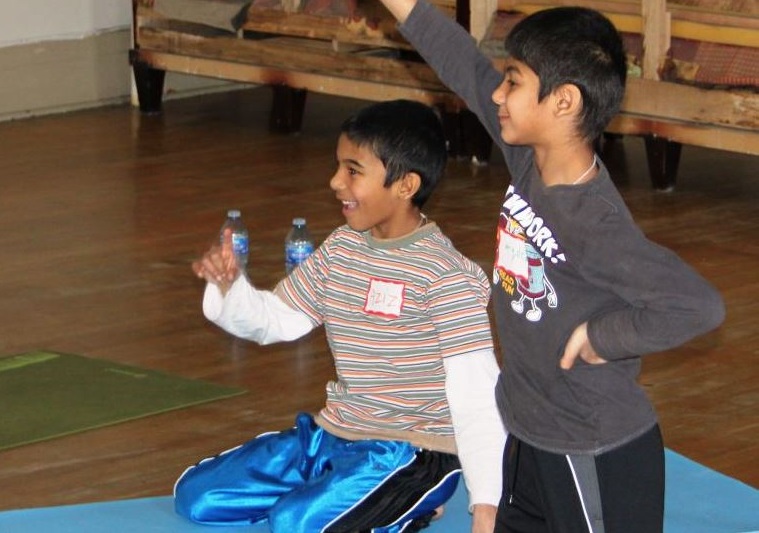

Kids yoga classes are different from adult yoga classes. Before you decide to become a kids yoga instructor, or start doing yoga with your class at school, you’ll want to become familiar with these 8 dirty truths about teaching yoga to kids.

1. There will be tears – The trigger could be being overtired, or not getting to lead the game, or feeling overwhelmed, or that somebody ran into them during Yoga Tag, or they are frustrated at not being able to do their favourite pose precisely when they wanted. Tears are part and parcel of kids learning about their emotions and how to handle life. After school yoga classes are especially prone to this response as kids have already put in a full day of learning, may not have had an adequate after-school snack (low-blood sugar often causes emotional melt-downs), or may simply need a little TLC whereas the rest of the class wants to burn off excess energy.

2. Classes are noisy – Laughter, chatting, roaring, barking, singing, energetic chanting and more are part of a yoga class for kids. Once a Grade 5 teacher asked me how to get her students to be quiet during yoga. My response: “Don’t.” Kids need to express themselves using all their senses and they will at every opportunity. I believe that happy noise is productive to learning. One rule, however, when the instructor talks everyone else listens. That way explanations and instruction can be given, and then activities can be fully interactive. So have fun, make some noise!

3. You will be interrupted – Imagine half the adults in your yoga class expressing out loud the first thought that comes to mind every time the teacher begins to explain a pose or activity. Imagine being half way through a story only to be asked, “Can I go to the bathroom?” Imagine hearing all about someone’s fish that died on the weekend, a favourite TV show, the type of cake that was served at a friend’s birthday party, or the nasty comment that Mommy said to Daddy when he came home late from work…again. Now you are at a kids yoga class.

4. Classroom management is an essential skill – You will need to possess some classroom management skills to keep Bobby from constantly playing with the gong, Sue from cuddling with her best friend, Joey on task, and Beth from using her yoga mat like a sled. Kids generally know how to behave but will take advantage of any opportunity for chaos. Every kids yoga instructor needs to find their own style of classroom management so that the environment stays conducive to learning and growth. Remember you are in charge.

5. When you mess up, you’ll be told– Adults are generally rather polite when instructors make minor mistakes, stumble over their words, or fall flat on their faces. Kids – not so much! They love pointing out your shortcomings, faux pas, and inconsistencies. Instructors have two options: 1) achieve perfection 2) develop a sense of humour. Since perfection is a far way off for me, I find laughing about my blunders a lot more fun. In addition, the way in which adults respond to error helps kids to see how to handle their own mistakes in positive, life affirming ways.

6. Classes are similar to herding cats – Each group has a variety of ages, physical, mental and emotional abilities, and maturity levels. Add to that the fact that kids’ attention spans can be measured in minutes and you have an interesting challenge on your hands. Establishing a class routine and making sure the themes are kid friendly will lengthen the amount of time kids will spend on any one given activity. Kids yoga instructors, however, had better always have a few fall back activities & yoga games in mind to keep everyone engaged and having fun.

7. It’s not about you – Kids love classes which focus on THEIRinterests. WebKinz, Hannah Montana, Star Wars, Creepy Crawlies, Princesses, Spiderman, and more all come to yoga class. When the instructor incorporates a yoga inspired activity which plays off the students’ favourite things then you know you’ve got a great thing going. As well each holiday from Valentine’s to Halloween provides fodder for fun. So don’t be surprised if you spend time wondering how to incorporate leprechauns or superheros into your next yoga class.

8. Props, props, & more props– For an adult yoga class most instructors use a mat, an mp3 player, and if you are lucky an eye pillow. Iyengar classes will add a strap, a block, a blanket, and possibly a chair. For any given kids yoga class, take that basic list and add books, puppets, feathers, scarves, pompoms, parachutes, stuffed animals, musical instruments, hula hoops, card decks, hoberman spheres, rocks, balls, bean bags, craft supplies, colouring sheets, and more. Be sure to have some storage space available.

So there you have it: the inconveniences, traumas & reality of teaching yoga to kids.

There is a flip side however. If you take pleasure in providing tools for kids to be happy and healthy the rest of their lives, enjoy genuine sharing, approach life with curiosity and creativity, want to end each class with a sense of satisfaction, and love to receive spontaneous hugs, then teaching yoga to kids is for you.

Be sure to subscribe (RSS or e-mail) to Yoga In My School to receive fantastic content to keep your yoga classes for kids and teens fresh and interesting. If you are on Facebook, become a Fan of Yogainmyschool.com and receive additional links and updates.

Posted in featured, kids, yoga basics, yoga in schoolComments (12)

Yoga for Boys Interview with Aruna Kathy Humphrys


Join Yoga In My School and special quest Aruna Kathy Humphrys of Young Yoga Masters as they discuss yoga for boys. This episode will examine assumptions about yoga, the disparity between women and men who practice yoga, differences between teaching yoga to girls vs. boys, and things to keep in mind when teaching yoga to boys. Tune in for some great tips to get those young men onto their mats so that they too can benefit from yoga asana, pranayama & relaxation.

Audio clip: Adobe Flash Player (version 9 or above) is required to play this audio clip. Download the latest version here. You also need to have JavaScript enabled in your browser.

Posted in Blog Talk Radio, kidsComments (1)

Warrior Poses – Anger and Heartbreak to Heal and Defend


As a member of the Namate Book Club I’ve been reading a wonderful little book entitled Downward Dogs & Warriors: Wisdom Tales for Modern Yogisby Zo Newell . The premise of the book is to educate the reader about the powerful stories from which Indian culture and yoga has come. It is “about using asana and related images for reflection, self-examination, and healing” in order to deepen “your yoga practice through observation of your body, your mind, and your emotions.”

The first story in the book is that of Shiva as Destroyer: Warrior Poses. In a nutshell, Shiva’s wife, Sati, threw herself into a fire becoming the sacrifice her father refused to provide during a ritual party where he was simply flaunting his power and prestige. Upon hearing of his wife’s demise, Shiva, overcome with grief and fury, ripped his hair from his head and threw it on the ground where it became a Warrior, the  embodiment of his emotions.“This is Virabhadra, the personification of righteous anger and the noble impulse to defend the innocent.”

This pose and its story took on very personal meaning over the past week as an innocent child became the victim of molestation. Suddenly each time I do Warrior pose, I am Virabhadra filled with anger and anguish at the injustices of life. What was once a sometimes demanding physical pose now encompasses an entire range of strong emotions.

Newell encourages yogis to:

Reflect and journal on a time when you came to the defence of a righteous cause or an innocent person. Invite the emotional qualities of that experience into your practice of the warrior poses. Keep the experience in mind while practicing with softness in the eyes and openness in the heart.

It may be a too soon for me to practice “with softness in the eyes and openness in the heart” as I am still in protect and safety mode. However, knowing the story behind the pose has given me hope to work through the pain to the point where my heart is open and calm as I move into action.

There are far too many children who are victims of abuse. Please do everything within your power to protect and fight for their innocence. Be the Warriors for those who cannot protect themselves.

Posted in kids, posesComments (4)

5 Ways Yoga Develops Self-Confidence in Teens
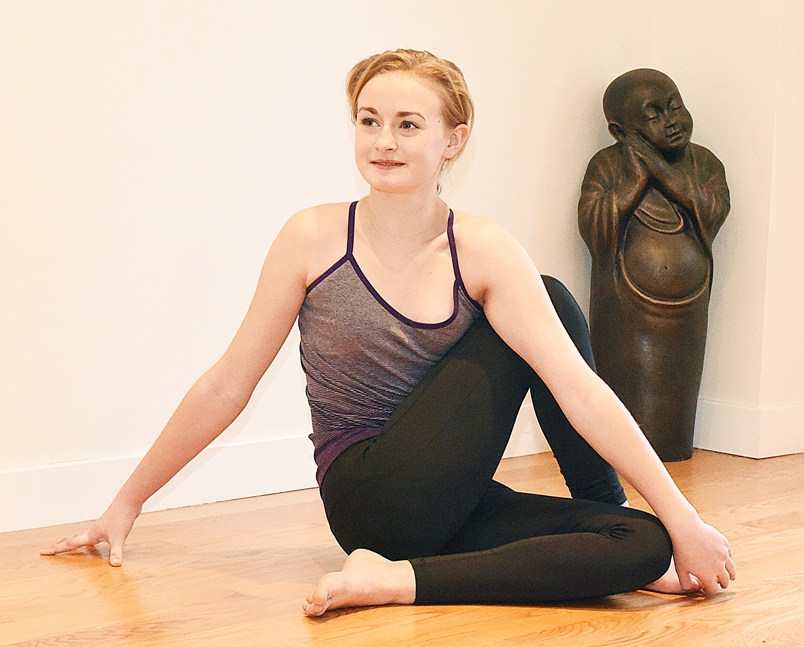

Recently I wrote an article for Radical Parenting which is a parenting site written by teens and gives you the straight facts on how to raise a teen in today’s crazy, mixed up world. The site is managed by Vanessa Van Petten, who manages 80 teen writers as they share life through their eyes and what they really need from their parents in order to succeed. The site covers everything from study hints to the latest teen trends and issues and promises to keep it real, challenge what you think you know, provide tried and true advice from those in the trenches, and help teens and parents navigate the teenage years as harmoniously as possible.

Shari wasn’t happy. She wasn’t popular, didn’t have a boyfriend, didn’t know what she wanted to do with her life, and felt alone much of the time even though she was surrounded by friends. Then Shari’s Mom enrolled her in a yoga class. In a matter of a few weeks Shari began to walk taller, feel stronger, and know that she could accomplish anything she set her mind to. She began to attract positive people and experiences into her life and spent most of her day smiling and feeling good about herself. As Shari practiced yoga her self-confidence grew. She knew herself better and was certain her future would be bright no matter what it held.

Here are a few ways in which yoga helped Shari and will help you feel good about yourself and know you can handle anything life brings your way…

Read the rest here.

Posted in teens, yoga basicsComments (0)

Yoga Twists for Teens A Challenge with Benefits


This is Part II of Yoga Twists for Kids Simple and Beneficial. This time we’re taking the twist factor up a notch, as any good teen is want to do, increasing the difficulty and getting deeper into yoga twists. I’m not going to itemize the benefits of twist here, simply refer to Part I. Teenagers bodies are now prepared for more of a challenge when it comes to twists and that is easy to provide. We’ll cover four twists here which are great for teens. 


There are many more twists and variations, especially when you delve into arm balancing poses and inversions. However, a large number of these require strength, balance, technique and other essential skills in order to perform. They are definitely something to work toward and have fun with but, many teens may not be ready just yet to take on the challenge. The ones covered here are great for High School PE classes, athletic teams, and teen yoga classes.

Yoga Twists for Teens

Half Lord of the Fishes Pose (Ardha Matsyendrasana)

Sit on the floor with legs bent. Place your left foot on the outside of your right buttock, left knee facing forward along the ground. Step the right foot to the outside of the left knee with the knee pointing straight up. Hug the raised knee and sit up on your sitz bones. Inhale and circle the right arm behind you, placing the hand on the floor as you exhale and lengthening the spine. Inhale, raising the left arm. Exhale place the elbow on the outside of the right thigh. If this isn’t possible simply hug the knee. Inhale and exhale two more times as you continue to deepen the twist throughout the entire spine, pressing the elbow against the knee and looking behind you. Binding Variation:If your left shoulder can clear the right knee (be on the outside of the knee), you can try to bind the arms. Circle the left hand toward the right hip and thread it through the hole between the legs. The right arms reaches behind the back to clasp the left fingers. Voilà, you are a pretzel! This is the quintessential twisty yoga pose and always a class favourite.

Revolved Chair Pose (Parivrtta Utkatasana)

revolved chair pose

revolved chair pose

Stand in Mountain Pose. Inhale raise your arms overhead. Exhale bend your knees and hips as if you are sitting in an imaginary chair. Inhale extend through the upper body, exhale, twist to the right, bringing your hands into prayer position, and placing the left upper arm on the outside of the right thigh. Look down at your toes or to the right, whichever is comfortable. Hold for 3 to 5 breaths. Inhale and return to standing. Repeat on the other side.

Revolved Triangle Pose (Parivrtta Trikonasana)

Stand with feet wide apart. Inhale raise the arms to shoulder height in line with feet, ankles should be directly below hands. Turn your left foot in slightly (this is your brake). Turn your right foot out 90 degrees. On an exhale turn your torso to the right bringing the left arm to the front, right arm reaching behind you, and squaring your hip points to the front as much as possible. Inhale, lengthen the side body, actively reach the arms apart, and ground through your big toes. Exhale, reach your left hand down to the ground or onto a block while the right hand reaches high. Beginners can look down or to the side. More advanced students can gaze at their raised thumb. Hold this pose for a few breaths. Exhale to release the twist. Inhale to return to standing. Reverse the feet and repeat on the other side.

Revolved Side Angle Pose (Parivrtta Parsvakonasana)

Stand with feet wide apart. Turn your left foot in slightly. Turn your right foot out 90 degrees. (So far the same as above) With hands on hips, turn your torso to the right and square you hips forward. As you do this lift the left heal off the mat, rotating on the ball of the foot. Exhale and bend the right knee to get your right thigh parallel to the ground. Keep the left leg active. On the next exhale, rotate the torso and lean it down with the left arm on the inside of the right foot, right thumb in the crease of the right hip, pressing the thigh down and back. If this is easy, inhale come up slightly place hands in prayer position, extend through the side ribs and then twist further by placing the upper left arm on the outside of the right knee. As with all twists, lengthen the body on the inhale, deepen the twist on the exhale. Hold for a few breaths. Inhale to come up. Exhale to release the twist. Reverse the feet and repeat on the other side.

Posted in poses, teensComments (1)

Follow Yoga In My School

Categories