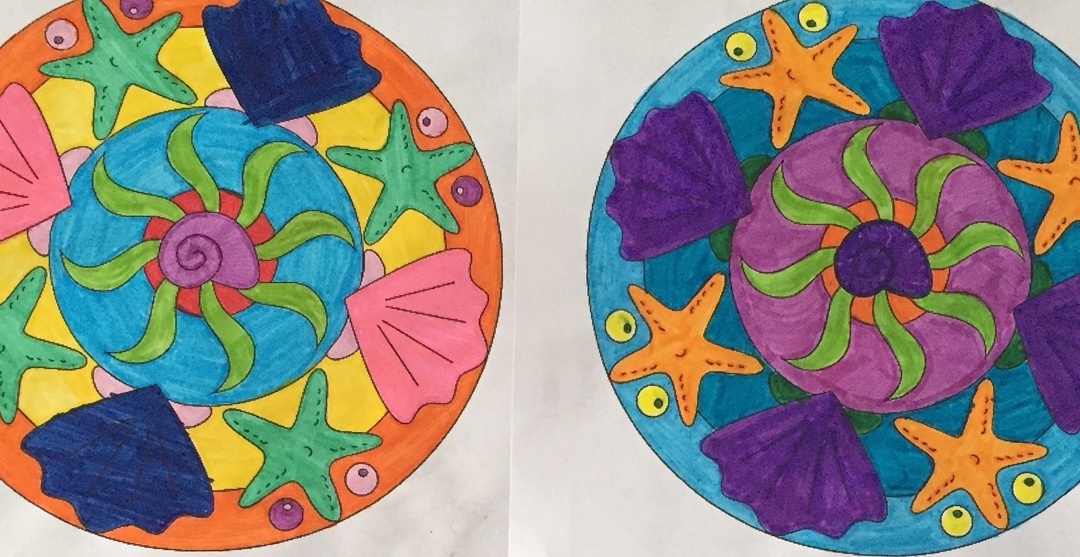
Sea Shell Mandala Coloring Page
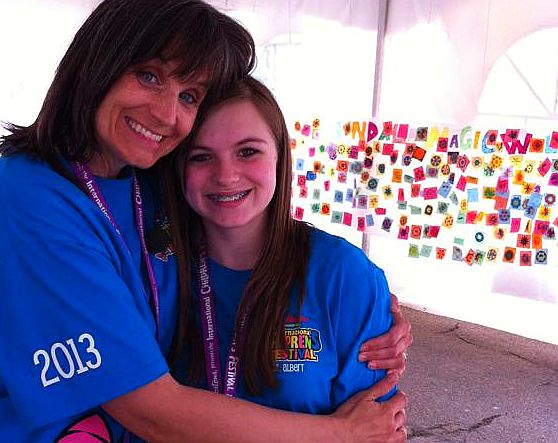
Colored Rice Mandalas a Hit at Children’s Festival
What a week! Over 1000 people came through the Mandala Magic site activity over the 5 days of the International Children’s Festival. We used 45 gallons of rice to create hundreds of colorful mandalas.
-
- colored rice – used 45 gallons of the stuff
-
- creating mandala templates
-
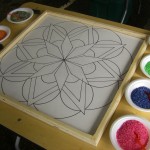
- ready for the next group
-
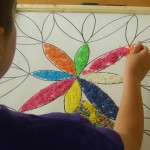
- a work in progress
-
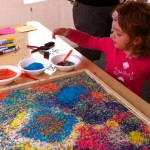
- mindful fun for all ages
-
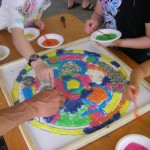
- working together
-
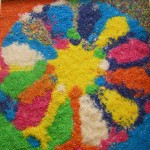
- We’re done!
-
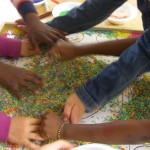
- creating rainbow rice
-
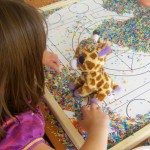
- even giraffe’s like to play
-
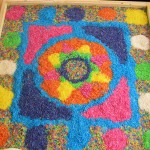
- patterning w circles, squares & stars
-
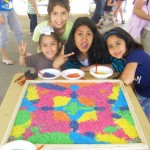
- 4 siblings worked together to create visual art
-
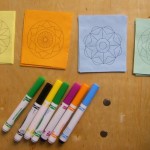
- mini mandalas to color
-
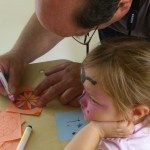
- Dad getting in on the fun
-
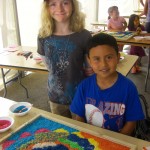
- they began as strangers and ended as friends w a shared piece of art
-
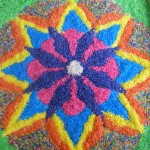
- gorgeous
-
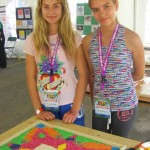
- 2 teens creating for 30 minutes = beauty in action
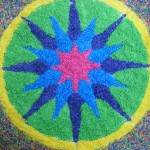

Many teachers and parents asked how the rice was colored to achieve the bright, vibrant colors. Here is the recipe I used – the secret ingredient is hand sanitizer.
- 8 cups rice
- 1/2 bottle food coloring (less for lighter color)
- 4 Tbsp hand sanitizer
Mix all ingredients in a large bowl. Spread in rimmed cookie sheet to dry (approx 30-45 mins).
Mandala Magic International Children’s Festival
Earth Yoga: Nature Mandala Celebrates Earth Day
Mandalas Universal Across Cultures
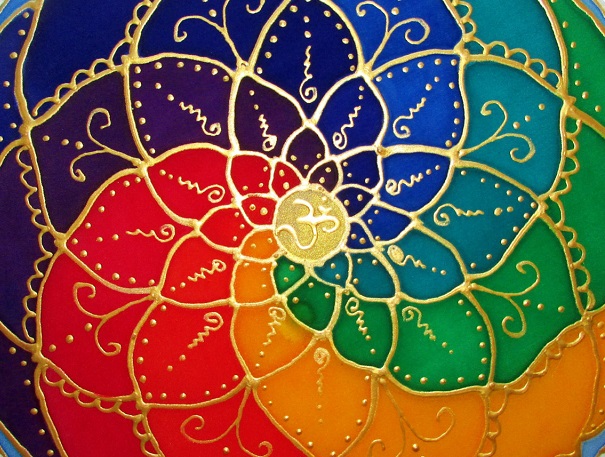
This is a continuation of the post Mandala Magic – Teaching Kids About Meditation. Here I’ll examine some of the cross cultural representations and usages of mandalas throughout the world. As I researched this post I was amazed at their universal application and beauty. I hope you enjoy learning about mandalas as you discover the wealth and knowledge of the great world cultures and religions. This would be a very interesting Social Studies or World Religion topic of discussion or research project and would open students’ eyes to cultural inter-connections and global commonalities.
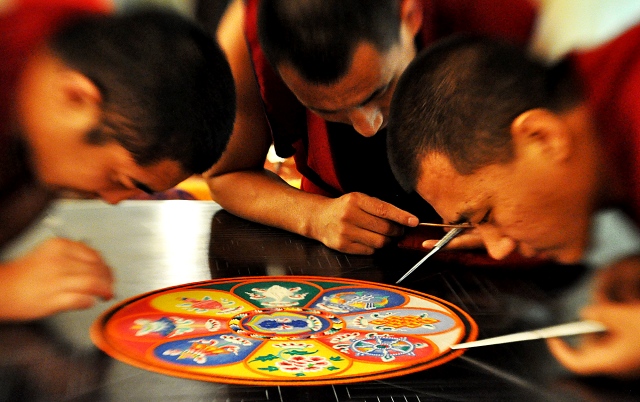
Buddhism: Representing the highest levels of spiritual development, mandalas are extensively used in Buddhism. Some of the most incredible are the sand mandalas created by Tibetan monks. These are highly artistic endeavors fanning out in geometric form from a central dot. The pure devotion and perfection of the work is remarkable and an act of worship in and of itself. Each color has specific symbolism: bue=infinity & healing, white=knowledge & longevity, red=life force & fire, green=harmony & vigour, yellow=renunciation & earth
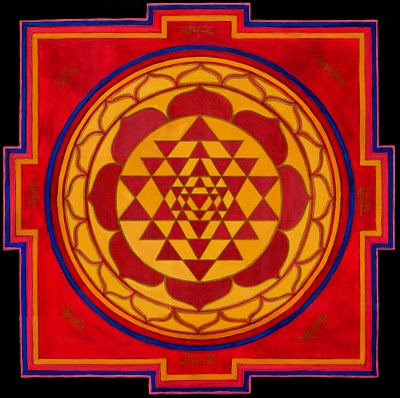 Hinduism: Yantra mandalas resonate with energy and beauty. They are meant to engross the mind and bring one to a higher level of enlightenment. Their outermost ring is a flame representing the burning of impurities as you enter the mandala. The inner ring of lotus petals symbolises the ‘pure place.’ Mantras (recitations) and mudras (hand symbols) often accompany mandala meditation.
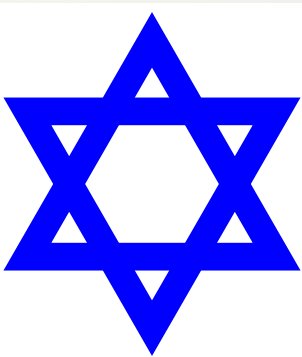 Judaism: The Star of David is a common motif in mandalas and was used extensively before being adopted as a Jewish symbol. It represents fire and water, male and female, heaven and earth, light and dark. These opposing forces linked together symbolize unity and harmony or the reconciliation of opposites. Franz Rosenzweig framed his philosophy of Judaism around the image of the Jewish star, composed of two triads: Creation, Revelation, and Redemption; God, Israel, and World.
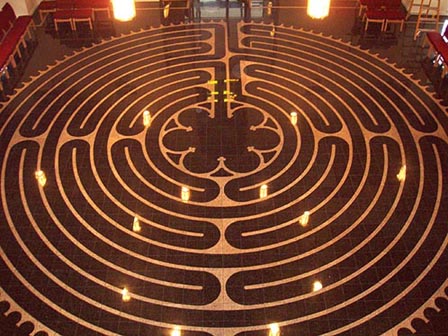 Christianity: Christian mandalas appear in rose windows (some of the most notable are in Chartres, Strasbourg and Notre Dame Cathedrals). They are also found in halos which are a representation of spiritual character through the symbolism of light. Rosaries and labyrinths are other Christian examples of mandalas and are used as a focus for spiritual meditation. Hildegard von Bingen is a 12th century German Benedictine nun who recorded visions in mandala form in her art.
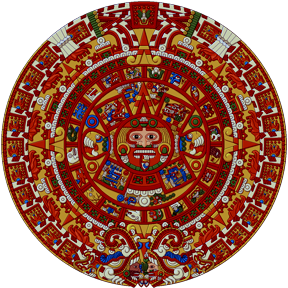 Mesoamerica: The Aztec calendar is a mandala. Both the sacred calendar (Tonalpohuallia – 260 day calendar) and the seasonal calendar (Xiuhpohualli – 365 day calendar) are depicted in elaborate mandala form. At the centre of the calendar is the sun god, Tonatiuh. He is surrounded by the five world creations. These calendars underscore the importance of each day and are a representation of the belief that time goes in cycles. These calendars work together as a wheel within a wheel and realign every 52 years.
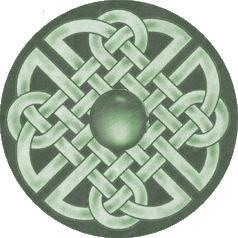 Celtic: The Celtic cross, knot, and triquetra are beautiful mandalas perfect for meditation. They have a dual meaning, as an art form and as a symbol of the voyage from earthly realm to the Otherworld of Celtic legend. The intricate designs are contained within the ‘eternal circle’ which relates to the Wheel of Life. These are meant to assist in each person’s spiritual journey and are a tool for coming into contact with our origins, visions, desires and devine ancestry.
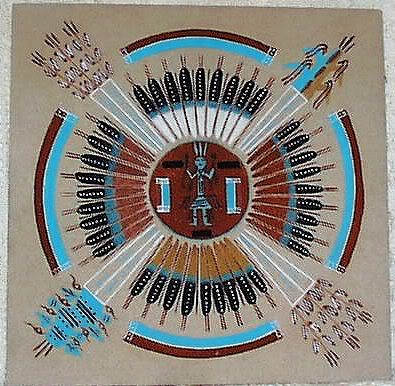 Native American: Navajo and Pueblo Indians create sand paintings during complex healing ceremonies. The paintings consist of representations of deities, animals, lightning, rainbows, plants, and other symbols which accompany a chant. Upon completion of the ceremony the painting is destroyed. The circular design represents the sun, the full moon, the earth and eternity. Other First Nations symbols using circles are dream catchers, feather, sun and wind, and labyrinth mandalas.
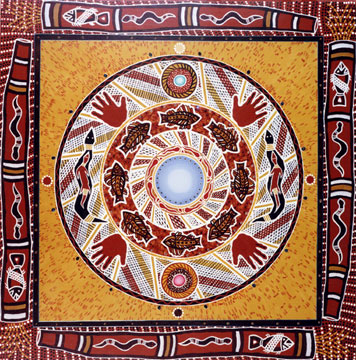 Aboriginal: Aboriginal art are depictions of Dreamtime which invent and maintain creation myths that are seen as ‘sacred time’ because it is a time before anything else could exist. Aboriginal people of Australia use ground art in sacred ceremonies. Ground art is created by men only and is a extensive ritual accompanied by chanting. Mandalas are also seen in bark paintings. Artist employ numerous symbols made from dots, concentric circles, curved and straight lines to create these amazing art forms.
Another area of research would be to find mandalas through the sciences. For example they can be found in geology, physics, biology, chemistry and astronomy. But we’ll save that for another day.
Mandala Magic – Teaching Kids About Meditation
 Podcasts
- Trauma Informed Parenting with Hala Khouri November 10, 2022The incredible Hala Khouri is our guest in this episode of the Yoga In My School podcast.Hala brings her extensive expertise in somatic experiencing, psychology, social justice, movement, and mindfulness as we discuss trauma informed parenting. Discover parenting with curiosity and awareness of our own conditioning so we can be more sensitive to the complex […]Donna Freeman
Upcoming Events