
Audio clip: Adobe Flash Player (version 9 or above) is required to play this audio clip. Download the latest version here. You also need to have JavaScript enabled in your browser.
Posted on 15 September 2010.
Audio clip: Adobe Flash Player (version 9 or above) is required to play this audio clip. Download the latest version here. You also need to have JavaScript enabled in your browser.
Posted in interviews, yoga in schoolComments (1)
Posted on 13 September 2010.
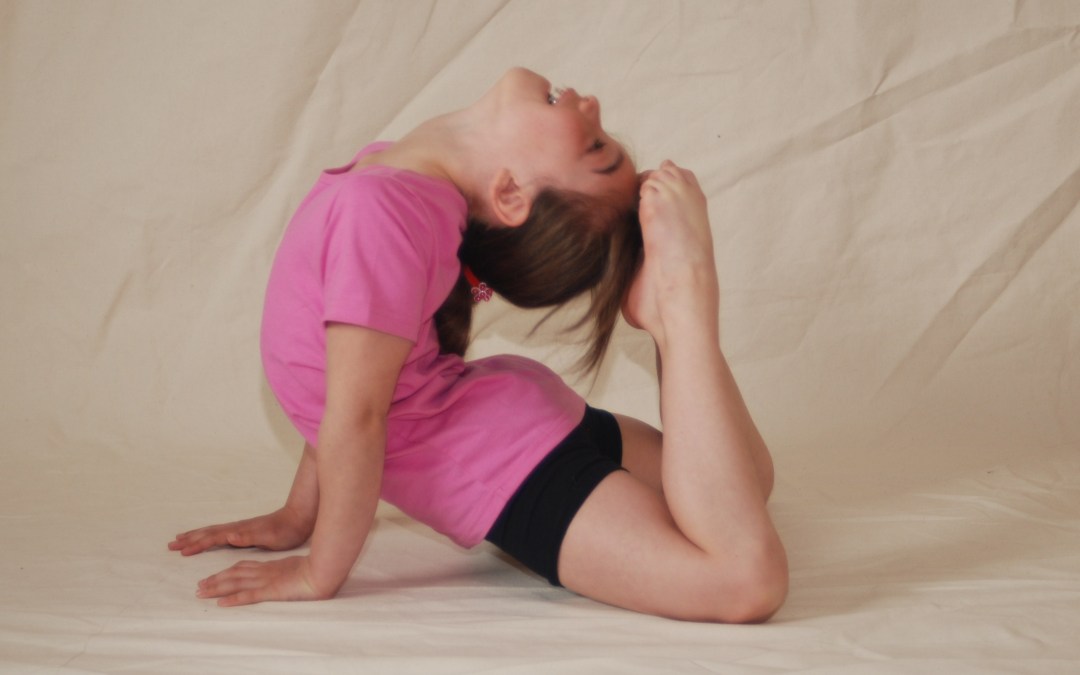
A local yoga instructor is doing her part to promote healthy living for children. Donna Freeman is the author of the new book Once Upon a Pose and today she joins us in studio. She’s also brought along some kids.
We are talking about yoga and kids and how fun it can be. But you’re specifically looking at how to get yoga into schools.
Yes, yoga in schools is a really wonderful combination of bringing the health benefits and the intellectual and emotional training into the classroom. It’s just vital to bring it into the classroom these days. Kids need these skills.
Q: What’s some of the stuff you are able to do in the classroom?
You can use what we are doing today which is a whole lot of partner poses. Partner poses develop cooperation and team work and they get kids talking with one another and working together in a really unique way.
Another thing that is nice about a school is you can use what’s in a school, a desk and a chair, to do yoga. A lot of people don’t think of that because in their typical class, which is in a studio, and there is a mat and they aren’t sure how to adapt it to a school.
Q: What are some of the benefits for kids?
Increased focus, improved concentration, their creativity skyrockets, their impulse control is greater. As well, it reduces their stress so that they are in a mental and emotional place where they’re ready to learn.
Q: And you think you can use this in different subjects?
For sure. You can use yoga in a science classroom, mathematics classroom, language arts classroom, even in an art classroom. Y0u can incorporate yoga poses in all those subject areas.
Watch video for more …
Posted in curriculum applications, DPA requirement, news, videos, yoga in schoolComments (0)
Posted on 26 August 2010.
Because breathing patterns have such a profound effect on our general health and mental states, breath awareness is at the heart of almost all yoga practices. Breathing interacts with and affects the cardiovascular, neurological, gastrointestinal and muscular systems. It also has general effects on sleep patterns, memory, energy levels and concentration.
Watch a baby at rest, and you’ll see a good example of healthy breathing. The pattern is relaxed, slow and wavelike. Every bone, muscle and organ moves with each breath. Unhealthy breathing, by contrast, is rigid or inappropriate to the situation and often exhibits excess muscle tension.
While abnormal breathing patterns vary, they’re often high in the chest, overly fast and shallow. Often, there’s no pause at the end of the exhalation. There may even be breath-holding or gulping. Such habits reinforce feelings of tension, agitation and anxiousness. By contrast, a healthy breathing pattern elicits a relaxation response, shifting the nervous system from fight-or-flight mode to a state of relaxed alertness.
One of our favorite ways of teaching and encouraging children to breathe healthfully is by using a Hoberman breathing sphere – a popular children’s toy that’s basically a geodesic dome made of jointed segments. By lightly pushing or pulling it on opposite sides, you can make it expand or contract, accordion-style. The movement serves as a visual model for the type of breathing we want the kids to imitate by helping them see and synchronize their breath with movement.
The teacher or other supervising adult may lead the group or – something we like to do – encourage one of the kids to lead, establishing the breathing rhythm. As the leader slowly expands the sphere, all inhale deeply and slowly through the nose, from the belly. The leader then pauses, emulating the short, natural pause that happens at the “top” and “bottom” of each healthy breath. As the leader contracts the sphere, all exhale through the nose just as slowly.
This efficient diaphragmatic breath is like watching the waves at the beach, with each breath swelling up from abdomen to chest and back down again.
The expansion-contraction cycle may be repeated as many times as necessary, but we find 5-10 cycles to be effective for helping the group calm and focus through this simple breath work.
Rhythm and slowness are two keys to using a breathing sphere effectively. By consciously slowing our breath, especially the exhalation, we can facilitate the relaxation response even more and develop some control over how our nervous system responds to our environment.
In the classroom and school environments such breath work lends itself readily to focus and mindfulness, preparing students to learn. Speeding thoughts slow. The body as a whole relaxes. Body and mind become centered, grounded. Thus, many teachers, counselors and administrators start their classes off by leading students in breathing with a sphere. Some schools have even used these breathing practices at assemblies or over the school intercom to calm and focus their students.
With the powerful visual representation of a healthy breath, no other words or descriptions are necessary. This tool can be effectively used by teachers who have no yoga experience and is particularly useful for second language learners, visual learners and children who struggle with anxiety and self regulation.
Synchronized breathing in a group exercise is also useful for developing a sense of community and safety as the group’s energy coalesces by breathing together. Simply, we are affected by each other’s breathing patterns. Conversely, it’s hard to relax and concentrate when we are around stressful breathing patterns. And when teachers learn, practice, and model healthy breathing, their classes become calmer and more productive, with corresponding benefits to everyone’s health and well-being.
Jim Gillen, RYT-500, is the cofounder of Yoga Calm, director of Still Moving Yoga in Portland, Oregon, and co-author of numerous education articles and Yoga Calm for Children: Educating Heart, Mind, and Body
Breathing spheres are available through the Yoga Calm Store.
.
Posted in breathing, mindfulness, relaxation, yoga basics, yoga in schoolComments (4)
Posted on 18 August 2010.
Audio clip: Adobe Flash Player (version 9 or above) is required to play this audio clip. Download the latest version here. You also need to have JavaScript enabled in your browser.
Posted in interviews, yoga in schoolComments (1)
Posted on 04 June 2010.
I love National Geographic. Always have. Maybe it was because my Dad insisted on having a subscription and keeping every single issue—I think they still have them on shelves in the basement. As a child I would spend hours looking at the amazing photographs and reading about the world and its many wonders.
As a family we also would watch Mutual of Omaha’s Wild Kingdom every Sunday evening and join Marlin Perkins as he traveled around the globe sharing his love of wildlife and the many dramas that unfold in the animal kingdom. And of course, there is World Wildlife Fund (WWF) with their work to sustain nature and save endangered and threathened animals.
Needless to say, I’m a big fan of protecting endangered and threatened species. I figured with all the animal yoga poses it would be natural to mix the two. So when I found these great colouring pages of a variety of precious species at Kids for Saving Earth I knew it was meant to be.
Read the full article on elephant journal.
Posted in creative, curriculum applications, fun, kids yoga, yoga games, yoga in schoolComments (0)
Posted on 02 June 2010.
The idea for this post if from Sydney Solis of Storytime Yoga.
The children’s classic The Owl and the Pussy Cat by Edward Lear is a perfect example of how to combine literature and yoga for learning and fun. It’s easy to see how yoga poses such as eagle pose (owl), cat pose (pussy cat), boat pose (pea-green boat), tree pose (bong-tree), cow pose with pig sounds (Piggy-wig), half moon pose (light of the moon) combine to create a wonderful physical poem which compliments this charming nonsense rhyme. By using yoga with literature you help children to involve more senses and thereby increase retention by creating and reinforcing neuron pathways in the brain. Besides that – it’s fun.
The Owl and the Pussy-Cat went to sea
In a beautiful pea-green boat:
They took some honey, and plenty of money
Wrapped up in a five-pound note.
The Owl looked up to the stars above,
And sang to a small guitar,
“O lovely Pussy, O Pussy, my love,
What a beautiful Pussy you are, you are, you are!
What a beautiful Pussy you are!”
Pussy said to the Owl, “You elegant fowl,
How charmingly sweet you sing!
Oh! let us be married; too long we have tarried:
But what shall we do for a ring?”
They sailed away, for a year and a day,
To the land where the bong-tree grows;
And there in a wood a Piggy-wig stood,
With a ring at the end of his nose, his nose, his nose,
With a ring at the end of his nose.
“Dear Pig, are you willing to sell for one shilling
Your ring?” Said the Piggy, “I will.”
So they took it away, and were married next day
By the Turkey who lives on the hill.
They dined on mince and slices of quince,
Which they ate with a runcible spoon;
And hand in hand on the edge of the sand
They danced by the light of the moon, the moon, the moon,
They danced by the light of the moon.
Enjoy this wonderful video by master storyteller and children’s yoga expert Sydney Solis of Storytime Yoga as she takes a group through the poem along with the corresponding yoga poses.
For more suggestions on how to use yoga in Language Arts class visit the Yoga Classroom Language Arts page.
Posted in curriculum applications, yoga in schoolComments (1)