Posted on 02 April 2012. Tags: ADHD, autism, cerebral palsy, down syndrome, FASD, special needs, teaching yoga in school, teaching yoga to kids
If you're new here, you may want to subscribe to my RSS feed. Thanks for visiting!
Adaptive yoga for children with special needs is a fabulous resource for parents, aides, teachers, physical therapists, OTs and more. Yoga is available to everyone and is easy to adapt to meet individual needs and requirements. It is a powerful form of physical and mental self exploration with tremendous benefits.
Here are a few tips to keep in mind as you develop and engage in yoga classes for those with special needs such as autism, ADHD, cerebral palsy, FASD, Down syndrome and more.
To learn more register for the Yoga for Children with ADHD training webinar (May 8, 2012) for tons of tips to develop focus & attention. One hour packed with fabulous information, plus a live Q&A. CLICK HERE.
- Focus on Fun: Approach yoga with a sense or curiosity and play. It’s fun to move your body, see what you can do, explore the world. The benefits of yoga are profound but children will lose interest if its not fun and joyful.
- Engage with child friendly themes: Build yoga sessions around topics that interest children. Maybe its superheros or princesses, the jungle or a trip to The Pet Store. Yoga can also be used to reinforce classroom themes and provide a kineasthetic learning modality. This allows children to improve their health while increasing their understanding of the themselves and their world. See Dinosaur Yoga, Shape Yoga and Bug Yoga.
- Provide challenges & repetition: Challenges are important to help children grow & push themselves. For many children with special needs standing on one foot (Tree Pose, Dancer Pose) is challenging. However as they practice this skill (repeating often) they become better at it until soon they have no problem. This works for all skills including relaxation and breathing exercises. The first time you may only be able to engage the students for a few moments. However, as you persist, repeating often, the children will gain valuable physical, emotional and mental skills.
- Encourage with positive feedback: Focus on what the children are doing right and reinforce it . i.e.: “I love your downdog.” “You’re really good at sitting quietly and listening.” “Wow, you’re great at balancing on one foot.” “What wonderful yogis you all are.” “Thank you for your happy participation in class today.” With children its so important to focus on the good and not worry too much about what is incorrect form, as long as it is not hurting themselves or others.
- Teach breathing & relaxation: In our hectic world it is vital to know how to calm, center and soothe. Yoga is a valuable mind-body tool which will help alleviate anxiety and stress.
- Keep yoga sessions short & ability appropriate: For many children their attention span maxes out at 5 minutes, often less for younger ones and those with special needs. This means lots of different activities to engage interest. Yoga is ideal because there are so many poses, each one an activity in and of itself. Keeping little ones engaged for 20-30 minutes is possible but you do have to be creative, energetic and focus on fun.
- Use props and visuals: Visuals, such as flash cards, stuffed animals, books, plastic figurines, etc., help students stay on task, provide visual support, and kids love the opportunity to pick from the bag/card deck to see what pose is coming next. They also provide opportunity for turn taking and reinforcement of appropriate social behavior.
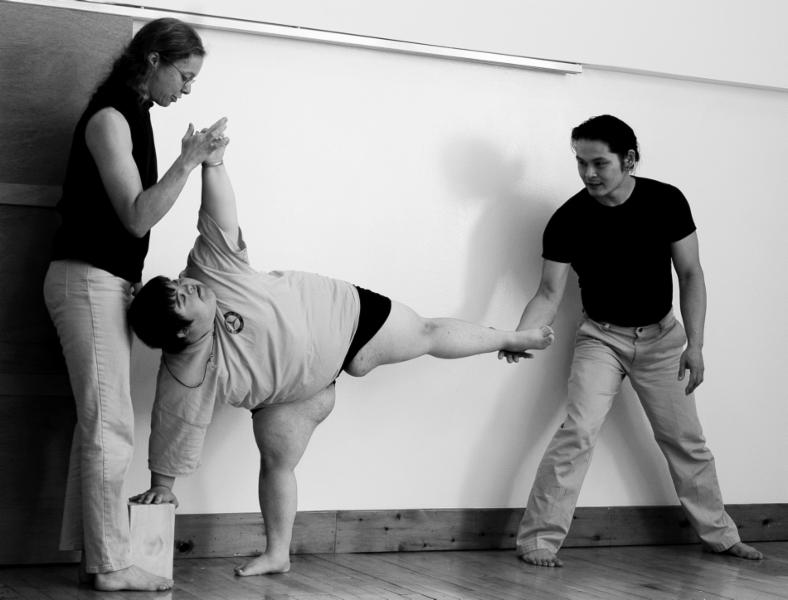
Enjoy this video from Spiral Movement Centre to see many of these tips in action with a group of six special needs youth.
http://www.youtube.com/watch?v=AcNYekfMuJY
3 people like this post.
Posted in featured, kids yoga, special needs, yoga in school
Posted on 03 October 2011. Tags: ADHD, autism, benefits, blog talk radio, kids yoga, special needs, teaching yoga to teenagers, teens yoga, yoga for teens
Stephanie Gottlob and Yuji Oka are on a mission. These two are the creators of Movement, a physical re-education program for children and teens with special needs. Their unique training program includes an holistic somatic approach including adaptive yoga. Their goal is to teach a core physical vocabulary of 12 movements through creative play. They join us to talk about their innovative approach and its incredible success in helping youth with ADHD, Autism, Down Syndrome, hyperactivity and emotional disturbances. Youth in their program learn not only physical skills but self-confidence, social skills and control. Based out of the Spiral Movement Centre in Toronto, Canada, Stephanie and Yuji transform lives one spin, hop and breath at at time.
Original Air Date: October 3, 2011
Audio clip: Adobe Flash Player (version 9 or above) is required to play this audio clip. Download the latest version here. You also need to have JavaScript enabled in your browser.
Connect with Stephanie and Yuji at Movement for Kids with Special Needs or the Spiral Movement Center on Facebook
Access our extensive library of interviews with leaders in the yoga and mindfulness community on iTunes. Guests include John Friend, Elena Brower, Cora Wen, Waylon Lewis, Sydney Solis, Sadie Nardini and many more.
4 people like this post.
Posted in benefits, interviews, kids yoga, special needs, teens yoga
Posted on 23 May 2011. Tags: ADHD, DVD, give aways, health, kids yoga, teaching, teaching yoga to kids, yoga poses for kids
Child Led, Child Friendly DVD a Winner
Enter to win a copy of Kids Teach Yoga: Flying Eagle DVD by leaving a comment below mentioning one quality of an eagle which you admire.
Yoga Calm’s new DVD entitled Kids Teach Yoga: Flying Eagle is sure to captivate. Inspired by Ryley’s song about eagles (which is used during the guided relaxation at the end of the yoga class) Flying Eagle encourages children to identify with an eagle’s positive traits of vision, strength, freedom and gentleness.
I absolutely love that the entire class is inspired and led by children. Young Haley leads the class with poise, confidence and clarity. She hands off the teacher’s mat to student leaders who take over during various activities and who receive compliments for their efforts and willingness to lead. Haley is matter of fact with her presentation using vocabulary, poses and visualizations appropriate for an elementary aged audience. The children modeling the class represent average children everywhere and help to encourage all to participate and adopt a “can-do attitude.”
The class itself is well thought out and includes breathing exercises with props (hoberman sphere & rock), floor work, standing poses, sun salutations with variations for ability & strength, partner and group poses, reclined twists and a final relaxation. There are 15 different activities in 20 minutes which may feel a little fast but which provides great opportunities to pause and explore at your leisure before pressing play to continue. Other kids will find the pace perfect to keep them engaged and active.
In addition to the yoga class there are also short bonus segments including:
- a talk about eagles by naturalist Steve Engel of the Audubon Society
- an interview with Lynea & Jim Gillen, founders of Yoga Calm
- a Focusing Fun Silent Ball activity with ADHD expert Dr Jeff Sosne to build focus and encourage eye contact.
Enter to win a copy of the DVD by leaving a comment below regarding the admirable qualities of eagles.
For additional entries:
- Visit YogaCalm on Facebook and post on their wall about the giveaway
- Share this review on Facebook with an @yogainmyschool.com mention (multiple entries allowed)
- Tweet about the contest on Twitter with an @DonnaKFreeman mention (multiple entries allowed) “Check it out! Flying Eagle Kids Yoga DVD #giveaway @DonnaKFreeman @yogacalmkids http://bit.ly/iurfve”
This contest ends May 31, 2011 at 9:00 pm MDT. Enter often and share generously! Good-luck.
Visit the Yoga Calm Store if you’d like to purchase a copy of Kids Teach Yoga: Flying Eagle – US$16 +S&H.
I received a copy of Kids Teach Yoga: Flying Eagle and other promotional material from Yoga Calm for this review. The opinions expressed in this review are entirely my own.
UPDATE: Congratulations to Lisa Kelly, the winner of a copy of Kids Teach Yoga: Flying Eagle DVD from Yoga Calm. Upon learning of her good fortune she said, “Looking forward to drawing inspiration from Flying Eagle! Thank you Donna for your continued hard work in helping other teachers spread the yoga-for-kids love. We are very lucky have you as such an amazing resource.”
3 people like this post.
Posted in give aways, kids yoga, products-kids
Posted on 18 November 2010. Tags: ADHD, autism, class, class management, kids yoga, kids yoga, mindfulness, positive, teaching yoga in school, teaching yoga to kids
Recently I was asked for any insight with this dilemma.
I am a children’s Yoga Teacher and have been approached by a mom on how to work with her 5 year old son on a certain behaviour. He will be in a quiet zone and suddenly has an outburst of energy which he manifests physically and verbally inappropriately by exaggerating movements and using a very loud voice. This happens in the class at times and at home.
Disruptive behaviors are a fact of life for most children, and are especially prevalent with children with ADHD and Autism. Learning to control those behaviors is an on-going and often frustrating process for them, their parents, teachers and care-givers. Here are some pointers to assist in correcting disruptive behaviors in yoga class and at home.
- Communicate Expectations: Children need to know what is expected of them. Talk to them. Tell them what appropriate behavior looks like, sounds like, feels like. Repeat often. This will make them more mindful of their actions. I did this every time we went to the grocery store or ate at a restaurant with my little ones. The same is true for yoga class. Be sure your students know what is expected of them and when. Remember to make time for fun, noise & play.
- Teach Respect: The yoga concepts of ahimsa (non-violence), brahmacarya (conservation) and tapas (self-discipline) all relate to respecting self and others. Teach respect through conversations and stories. Congratulate children when they show respect. Remind them when they forget. Show respect in your own life, especially when dealing with a disruptive individual. As tempting as it is, this is not the time to lose your cool. Practise Take 5 together as needed.
- Reward Appropriate Behavior: Build in rewards. Often disruptive children only receive attention for their inappropriate behaviors. Instead catch them being good. Praise often specifically mentioning what they are doing well. Choose a child who is behaving appropriately to be the teacher’s assistant for a pose/activity. Trade off yoga ’work’ with a yoga ‘reward’; if they can focus on the class poses/meditation then they get to play a yoga game/sing a song. I often reward my children for good behavior with a trip to the Pet Store after running errands.
- Follow Through: Children thrive when they know what to expect. Establish consequences and always follow through, even when it is inconvenient or embarrassing. This may mean taking a child to the side and reminding them of expectations. Sometimes a calming hand, a whispered comment or providing responsibilities will engage the child and turn a negative into a positive. Some classes provide a quiet corner when children can go if they need some alone time or a breathing break. If negative behavior persists ask the child to remove themselves temporarily. Briefly talk things over away from prying eyes and ears and then return to normal activities, leaving the incident behind.
- Practice Patience: Remember that each child is growing and learning. They will outgrow and learn to manage disruptive behaviors with time and consistency. Work on one behavior modification at a time. Stick with it and keep expectations realistic (5 minutes of good behavior for many is a triumph). Set children up for success, then celebrate those successes lavishly.
If you enjoyed this post share it with a friend and be sure to subscribe (RSS or e-mail) to receive future posts on this and other topics to make your kids yoga classes a roaring success.
You may also want to visit Young Yoga Masters post on Classroom Management ,ChildLight Yoga’s blog post How do I Manage Challenging Behavior in a Kid’s Yoga Class or Indra Singh’s post Is Your Yoga Class Out of Control.
1 person likes this post.
Posted in kids yoga, mindfulness, yoga in school
Posted on 01 November 2010. Tags: ADHD, autism, benefits, blog talk radio, cerebral palsy, Craig Hanauer, special needs, teaching yoga in school, teaching yoga to kids
Founder of
Every Kids Yoga, Craig Hanauer, joins Yogainmyschool.com to highlight how yoga can be used as a therapeutic and fun filled approach for assisting children with special needs. Individuals with
Autism Spectrum Disorders,
ADHD, Sensory Processing Dysfunction and Mild
Cerebral Palsy can reap tremendous benefits from a regular yoga practise leading to increased health, creativity and connections with self and others. Craig will share his insights and expertise from years of working with children with special needs.
Original Air Date: November 1st, 2010
Audio clip: Adobe Flash Player (version 9 or above) is required to play this audio clip. Download the latest version here. You also need to have JavaScript enabled in your browser.
In this interview Craig gives specific examples of how yoga can be a powerful adjunct therapy for children with special needs, underlying the many benefits it provides as he highlights the connections between yoga class and the world. Of special note is yoga’s ability to develop core strength thereby freeing the muscles and mechanisms of breathing to perform their proper function. In addition yoga’s ability to provide proprioceptive input and vestibular input is extremely useful for therapists, teachers, care givers and parents in meeting the developmental needs of their children.
Be sure to join our newsletter mailing list (see RH tool bar and the FREE downloadable kids yoga adventure story The Pet Store) as we will definitely be bringing Craig back for more on this topic.
8 people like this post.
Posted in interviews, special needs, yoga in school
Posted on 11 October 2010. Tags: ADHD, exercises, how to, kids yoga, kids yoga, meditation, mindfulness, props, special needs, teaching yoga in school, teaching yoga to kids
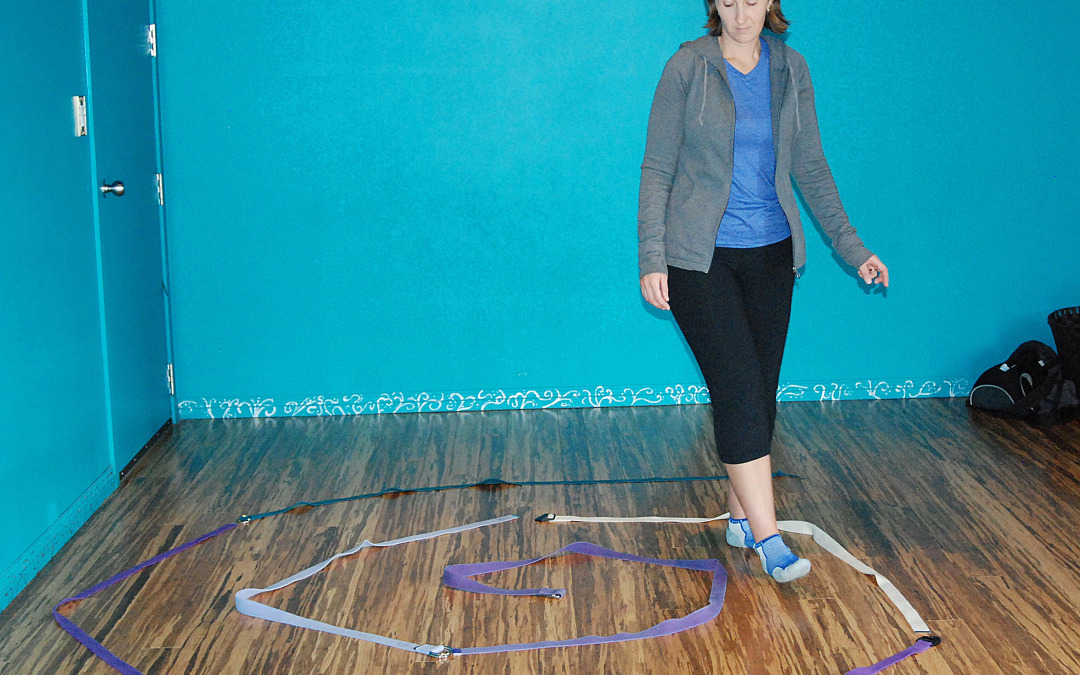
A rope can be a useful yoga prop. This video demonstrates one way to use a rope in a kids yoga class. Rope Walking is a mindfulness activity which teaches focus and concentration. It also improves balance and coordination while providing a calming activity that is both challenging and soothing in nature. This mindfulness activity is ideal for individuals with ADHD as it allows for movement while developing mind/body awareness.
Rope Walking
Today we have three young yogis who are going to show you how to do rope walking.
For younger children (or those with special needs), they can walk on the path made in between the rope. Walking all the way to the center.
For older children, they can walk on the rope. This increases the diffficutly of the exercise and helps them to learn balance, body coordination. It helps them to teach where they are looking they want to place their feet. And is a lovely exercerise to teach them how to do a walking meditation. Of course, once they get really good at it they can do various activities such as jumping or walking a little faster. But for the most part, simply walking along a rope is challenge enough.
And that’s how you do rope walking.
More yoga and mindfulness activities can be found on YogaInMySchoolTV on YouTube.
4 people like this post.
Posted in kids yoga, meditation, mindfulness, special needs, videos