Posted on 03 October 2011. Tags: ADHD, autism, benefits, blog talk radio, kids yoga, special needs, teaching yoga to teenagers, teens yoga, yoga for teens
If you're new here, you may want to subscribe to my RSS feed. Thanks for visiting!
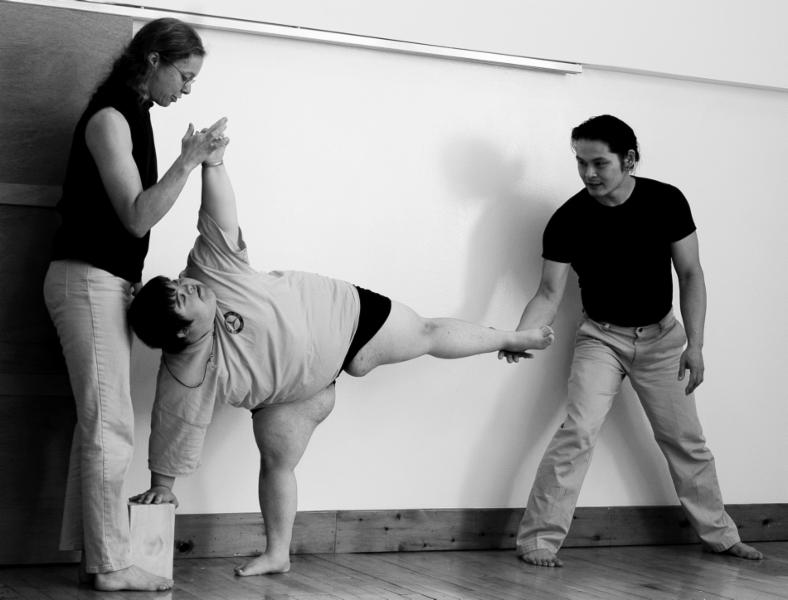
Stephanie Gottlob and Yuji Oka are on a mission. These two are the creators of Movement, a physical re-education program for children and teens with special needs. Their unique training program includes an holistic somatic approach including adaptive yoga. Their goal is to teach a core physical vocabulary of 12 movements through creative play. They join us to talk about their innovative approach and its incredible success in helping youth with ADHD, Autism, Down Syndrome, hyperactivity and emotional disturbances. Youth in their program learn not only physical skills but self-confidence, social skills and control. Based out of the Spiral Movement Centre in Toronto, Canada, Stephanie and Yuji transform lives one spin, hop and breath at at time.
Original Air Date: October 3, 2011
Audio clip: Adobe Flash Player (version 9 or above) is required to play this audio clip. Download the latest version here. You also need to have JavaScript enabled in your browser.
Connect with Stephanie and Yuji at Movement for Kids with Special Needs or the Spiral Movement Center on Facebook
Access our extensive library of interviews with leaders in the yoga and mindfulness community on iTunes. Guests include John Friend, Elena Brower, Cora Wen, Waylon Lewis, Sydney Solis, Sadie Nardini and many more.
3 people like this post.
Posted in benefits, interviews, kids yoga, special needs, teens yoga
Posted on 06 April 2011. Tags: adaptive yoga, autism, Barbara Gini, benefits, how to, kids yoga, special needs, teaching yoga in school, teaching yoga to kids
Founder of BodyLogique, Barbara Gini discusses yoga for children with autism spectrum disorders. This in depth interview includes common adaptations of yoga poses and breathing exercises, techniques to improve sensory integration and ways to promote social interaction. Teachers, parents, therapists and aides who work with children with autism will greatly benefit from Barbara’s wealth of expertise.
Original Air Date: April 6, 2011
Audio clip: Adobe Flash Player (version 9 or above) is required to play this audio clip. Download the latest version here. You also need to have JavaScript enabled in your browser.
Connect with Barbara via the BodyLogique blog, Facebook or Twitter @BodyLogique.
We apologize for the static/sound quality – not too sure why this occurred during this interview but will strive to improve it in the future.
If you enjoyed this interview visit our iTunes feed for many more that you can download FREE to your iPod. Also subscribe (RSS or e-mail) so as not to miss any of our upcoming shows. Guests this spring include Lynn Hasselberger of myEARTH360, Eoin Finn, Hari Bhajan Khalsa of YogaMint and more.
Other resources for further information on Yoga for Autism include:
2 people like this post.
Posted in benefits, interviews, kids yoga, special needs
Posted on 18 November 2010. Tags: ADHD, autism, class, class management, kids yoga, kids yoga, mindfulness, positive, teaching yoga in school, teaching yoga to kids
Recently I was asked for any insight with this dilemma.
I am a children’s Yoga Teacher and have been approached by a mom on how to work with her 5 year old son on a certain behaviour. He will be in a quiet zone and suddenly has an outburst of energy which he manifests physically and verbally inappropriately by exaggerating movements and using a very loud voice. This happens in the class at times and at home.
Disruptive behaviors are a fact of life for most children, and are especially prevalent with children with ADHD and Autism. Learning to control those behaviors is an on-going and often frustrating process for them, their parents, teachers and care-givers. Here are some pointers to assist in correcting disruptive behaviors in yoga class and at home.
- Communicate Expectations: Children need to know what is expected of them. Talk to them. Tell them what appropriate behavior looks like, sounds like, feels like. Repeat often. This will make them more mindful of their actions. I did this every time we went to the grocery store or ate at a restaurant with my little ones. The same is true for yoga class. Be sure your students know what is expected of them and when. Remember to make time for fun, noise & play.
- Teach Respect: The yoga concepts of ahimsa (non-violence), brahmacarya (conservation) and tapas (self-discipline) all relate to respecting self and others. Teach respect through conversations and stories. Congratulate children when they show respect. Remind them when they forget. Show respect in your own life, especially when dealing with a disruptive individual. As tempting as it is, this is not the time to lose your cool. Practise Take 5 together as needed.
- Reward Appropriate Behavior: Build in rewards. Often disruptive children only receive attention for their inappropriate behaviors. Instead catch them being good. Praise often specifically mentioning what they are doing well. Choose a child who is behaving appropriately to be the teacher’s assistant for a pose/activity. Trade off yoga ’work’ with a yoga ‘reward’; if they can focus on the class poses/meditation then they get to play a yoga game/sing a song. I often reward my children for good behavior with a trip to the Pet Store after running errands.
- Follow Through: Children thrive when they know what to expect. Establish consequences and always follow through, even when it is inconvenient or embarrassing. This may mean taking a child to the side and reminding them of expectations. Sometimes a calming hand, a whispered comment or providing responsibilities will engage the child and turn a negative into a positive. Some classes provide a quiet corner when children can go if they need some alone time or a breathing break. If negative behavior persists ask the child to remove themselves temporarily. Briefly talk things over away from prying eyes and ears and then return to normal activities, leaving the incident behind.
- Practice Patience: Remember that each child is growing and learning. They will outgrow and learn to manage disruptive behaviors with time and consistency. Work on one behavior modification at a time. Stick with it and keep expectations realistic (5 minutes of good behavior for many is a triumph). Set children up for success, then celebrate those successes lavishly.
If you enjoyed this post share it with a friend and be sure to subscribe (RSS or e-mail) to receive future posts on this and other topics to make your kids yoga classes a roaring success.
You may also want to visit Young Yoga Masters post on Classroom Management ,ChildLight Yoga’s blog post How do I Manage Challenging Behavior in a Kid’s Yoga Class or Indra Singh’s post Is Your Yoga Class Out of Control.
1 person likes this post.
Posted in kids yoga, mindfulness, yoga in school
Posted on 01 November 2010. Tags: ADHD, autism, benefits, blog talk radio, cerebral palsy, Craig Hanauer, special needs, teaching yoga in school, teaching yoga to kids
Founder of
Every Kids Yoga, Craig Hanauer, joins Yogainmyschool.com to highlight how yoga can be used as a therapeutic and fun filled approach for assisting children with special needs. Individuals with
Autism Spectrum Disorders,
ADHD, Sensory Processing Dysfunction and Mild
Cerebral Palsy can reap tremendous benefits from a regular yoga practise leading to increased health, creativity and connections with self and others. Craig will share his insights and expertise from years of working with children with special needs.
Original Air Date: November 1st, 2010
Audio clip: Adobe Flash Player (version 9 or above) is required to play this audio clip. Download the latest version here. You also need to have JavaScript enabled in your browser.
In this interview Craig gives specific examples of how yoga can be a powerful adjunct therapy for children with special needs, underlying the many benefits it provides as he highlights the connections between yoga class and the world. Of special note is yoga’s ability to develop core strength thereby freeing the muscles and mechanisms of breathing to perform their proper function. In addition yoga’s ability to provide proprioceptive input and vestibular input is extremely useful for therapists, teachers, care givers and parents in meeting the developmental needs of their children.
Be sure to join our newsletter mailing list (see RH tool bar and the FREE downloadable kids yoga adventure story The Pet Store) as we will definitely be bringing Craig back for more on this topic.
7 people like this post.
Posted in interviews, special needs, yoga in school
Posted on 05 May 2010. Tags: autism, cinco de mayo, fun, holiday yoga, holidays, kids yoga, kids yoga, play, teaching yoga to kids, yoga, yoga games, yogainmyschool
I love Cinco de Mayo. Maybe its the lively music, amazing food (enchiladas, fresh salsa, ensalada, chimichangas, mole, tamales, sopapilla…YUM!), remembrances of time spent in Latin America, or the entertaining atmosphere which permeates every Cinco de Mayo fiesta I’ve attended. Each year I like to include some fun Cinco de Mayo inspired yoga activities into my kids yoga classes. Here are a few suggestions.
Spanish Language
Teach some of the pose names in Spanish. (Since I don’t speak fluent Spanish I used my iTranslate app. Very handy.)
tree=árbol, mountain=montaña, warrior=querrero, boat=barco,etc.
This will help children to broaden their cultural horizons and appreciate the marvelous diversity which makes up the world. For more information on second language learning in the yoga classroom listen to this interview with Beth Reese of Yogiños.
Burrito Roll (Sushi Roll)
This is a great sensory activity which makes kids feel safe and secure and stimulates the proprioceptors (the neurons which relay the information of one’s own body position and movement).
Have child lie across the end of a yoga mat with their head off one side.

With their arms down by their sides, roll them up in a mat (include a favourite stuffed animal if desired).

Unroll them.
Sometimes kids like to do this themselves by grasping the mat up near their neck and rolling and unrolling repeatedly as they desire. I have one autistic student that does this whenever he feels the need during class which will often inspire the rest of us to join him.
Mexican Hat Dance
Have all the children make a giant circle while holding hands. Place a sombrero in the center of the circle. Begin to play some Mexican inspired music and have the children walk to one direction around the sombrero. When the name of a child is called, that child leaves the circle and dances around the sombrero until another child’s name is called when they rejoin the circle. Continue until all children have a chance to dance in the center.
Buenos Amigos
Provide each child with a paper and pencil. Have each child write as many nice things about their classmate (amigo) to their right as they can in a given amount of time (5 mins). Suggest kind things about how they act, think, play, work, etc. Give the paper to the amigo to take home.
You could also include a craft like paper plate maracas or colouring page of children in traditional mexican costumes.
What are some ways you enjoy celebrating Cinco de Mayo with your kids yoga classes?
Posted in fun, kids yoga, poses, yoga games
Posted on 26 April 2010. Tags: autism, benefits, blog talk radio, breathing, kids yoga, kids yoga, meditation, special needs, teaching yoga in school, teens yoga, yoga, yogainmyschool
Stacey Betts, co-authour of Yoga For Children With Autism Spectrum Disorders
and mother of two children with autism, is our special guest for this episode. Join us as we discuss how yoga can benefit children with autism, ways to make the practice of yoga accessible, and much more. If you have a child with autism or work with children with autism you’ll definitely want to tune in and learn how yoga can make a difference today.
Original air date: April 26/2010
Audio clip: Adobe Flash Player (version 9 or above) is required to play this audio clip. Download the latest version here. You also need to have JavaScript enabled in your browser.
Stacey Betts shares her own personal story of raising two children with Aspergers and PDD (Pervasive Developmental Disorder). She talks about how yoga addresses the physcial and emotional issues typical of Autism Spectrum Disorders such as poor muscle tone, digestive issues, balance, anxiety and depression. As well, Stacey addresses the need for parents and caregivers to build a suport network and to take care of themselves. Finally she stresses the need to approach yoga for children and teens with autism in a flexible manner, being prepared to adapt the practice to the needs of each individual. You’ll enjoy Stacey’s candid and frank manner and her helpful hints on living with autism.
1 person likes this post.
Posted in interviews, special needs