Tag Archive | "language"

OM The Sound of the Universe


This is Part 1 in a four part series on Om for Kids and Teens. Watch for Part 2: Chanting OM: How to Teach Kids to Chant (Video), Part 3: To Om or Not to Om and Part 4: The Benefits of Om coming soon.

Yoga Chanting for Kids & Teens

Often when I visit a class for the first time a number of kids come in right away, sit cross legged, hands in the air, thumb and index finger joined, and spontaneously chant “om.” Their natural curiosity and receptivity always makes me smile. They are so adorable in their sweet innocence as they connect with this universal sound and mudra (hand position).

Teaching Om

Now for a little guidance.

One of the easiest, and most approachable, ways to teach “om” is to break it down into A-U-M.

Sit cross-legged, place your hands on your knees in gyan mudra (thumb and index finger forming a circle, other fingers elongated). Aum is generally considered to have 3 1/2 measures: A, U, M and silence. Close your eyes, inhale then exhale as you perform Aum, repeating three times. The sounds ahhhh starts in our chest at the heart center, moves upward with the ooooo sound in the throat center, and ends with the sounds mmmmm, which vibrates the higher centers in the head. (~Once Upon a Pose, p. 4)

It’s fun to play around with variations in volume, pitch and timing. As with any yoga practice, approach “om” with curiosity and openness to see what feels right to you.

Three Symbols of Om

If you’d like to go all Hindu with your students you can explore the symbolism behind the sound. According to the Mandukya Upanishad,

Om is the one eternal syllable of which all that exists is but the development. The past, the present, and the future are all included in this one sound, and all that exists beyond the three forms of time is also implied in it.

Each tone of “om” relates to a time of life, a power and a Hindu deity/philosophy.

A = birth, creative power (Brahma)

U = life, sustaining power (Vishnu)

M = death, destructive power (Shiva)

silence = bliss, pure consciousness (Turiya)

How do you teach “om” to kids and teens?


2 people like this post.

Posted in benefits, featured, meditation, yoga basicsComments (0)

Vishnu’s Ohmazing Journeys A Treasure


Second Yogiños Yoga for Youth DVD Honors Indian Culture

Enter to win a copy of this DVD by leaving a comment telling about a challenge you’ve overcome to get where you are today. Contest closes November 30, 9:00 pm MST.

Vishnu’s Ohmazing Journeys is the newest DVD from Yogiños Yoga for Youth and is a celebration of Indian culture. This kids yoga DVD recounts three different adventures of Vishnu, a supreme God of Hinduism and Indian mythology.

Vishnu’s Ohmazing Journeys recounts three Hindu myths with Vishnu taking on a different role/ avatar in each one to overcome challenges and find great treasures.

The first is of Vishnu as the Tortoise, the second with Vishnu as a Boar and the third is Vishnu as the Boy Krishna.  Yogiños founder, Beth Reese does a fabulous job of intertwining yoga poses with the stories and includes clear alignment cues such as root to rise, hug the mid-line and shoulder blades on your back, thereby teaching body awareness and mindful practice of the poses.

A continual theme throughout all three stories is that of making “ohmazing” choices and trusting in your strong foundation in order to meet and overcome life’s challenges. The links between yoga practice on the mat and application in everyday life off the mat are clear, age appropriate and useful. In addition, Yogiños stays true to their tri-lingual base intertwining English, Spanish and Sanskrit throughout the DVD and including a full Spanish version.

The Bonus Tracks extend the educational aspect of the DVD expanding knowledge about the Crow Collection of Art, a herb garden and environmental conservation through prAna’s Natural Power Initiative.

I found this DVD ideal for tweens as it is smart, educational and culturally rich. I especially appreciated the beautifully performed story of Krishna and and Kaliya told through Indian dance. Enjoy this video trailer.

To Enter: Enter to win a copy of the DVD with a comment below stating a challenge you have overcome to get to where you are today.

Additional entries:

The give away ends on November 30th at 9 pm MST. The winner will be chosen at random and will be contacted by e-mail. The winner will have 48 hours to claim their prize.

Buy yourself a copy of Vishnu’s Ohmazing Journey here through PayPal for $15.95 USD. Yogiños graciously provided a DVD for this review as well as the give-away. The opinions expressed here are completely my own.

2 people like this post.

Posted in give aways, kids yoga, products-kidsComments (3)

Natural Elements: Connect, Move, Relax

Guest post by Jennifer Cohen Harper

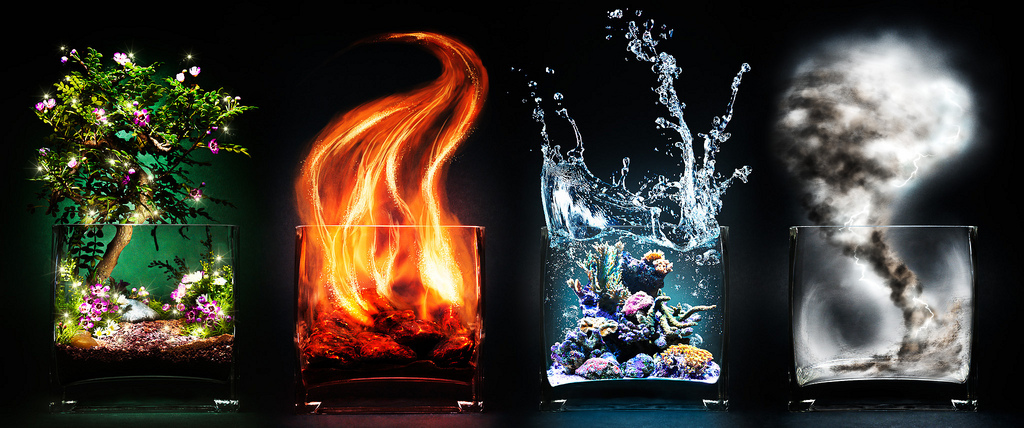
This activity, inspired by Thich Nhat Hanh’s pebble meditation, connects students to aspects of nature and the different kinds of strength that make up the whole.

In this Little Flower Yoga version of a pebble meditation practice, we incorporate movement, drawing and journaling, along with the a mindfulness practice, to create a complete experience for our students. You can do this activity all at once, or you can break it up into smaller parts and practice it with your children over several sessions. Using small stones to represent each of element is something that supports the students and provides a grounding energy to the activity. Four different colored stones will represent the following: mountain, tree, flower, still water.

To introduce this activity you want to give the students a chance to explore the feeling of each element. A wonderful way to do this is to allow the students time to draw each element as part of their practice.

1. Give each child 4 stones (one of each color – and tell them that these stones represent a mountain, a tree, a flower and still water) and 4 index cards, and ask them to put them on their mat in front of them.

On the first card, ask the students to draw a picture of a mountain. Now pick up your first pebble, which will represent a mountain (you can let the students choose which color best represents a mountain to them). Tell the students that a mountain represents strength and stability, and that inside each one of them is a mountain that is strong and steady, no matter what is happening around them. Have them hold the stone they have chosen, come into mountain pose, and then practice saying the following together: “Breathing in I see myself as a mountain, Breathing out I feel strong.” Repeat this 3 or 4 times, and then take one or two breaths silently together. Have them write along the bottom of their drawing Breathing in I see myself as a mountain, Breathing out I feel strong. Optionally, on the other side of the card, they can draw a picture of themselves in mountain pose.

2. The next element to explore is a tree. Invite the students to draw a tree on the next index card. Then pick up the pebble that represents a tree, and come to stand in tree pose. Tell the students that a tree represents balance as it reaches its roots down into the earth, and it’s branches up to the sky. Let them know that they have the balance of a tree inside each of them, and that this balance will help them live a healthy life. Practice saying together: “Breathing in I see myself as a tree, Breathing out I feel balanced.” Repeat 3 or 4 times, and then take one or two breaths silently together. Have them write along the bottom of their drawing Breathing in I see myself as a tree, Breathing out I feel balance. Optionally, on the other side of the card, they can draw a picture of themselves in tree pose.

3. The next element is a flower. Have the students draw a flower on their third index card, and have them choose a stone to represent flowers. Then come into flower pose. Tell them that a flower represents joy and beauty. Inside each of us is a flower that is always growing, keeping us joyful even during hard times. Practice saying together: “Breathing in I see myself as a flower, Breathing out I feel joyful.” Repeat 3 or 4 times, and then take one or two breaths silently together. Have them write along the bottom of their drawing Breathing in I see myself as a flower, Breathing out I feel joyful. Optionally, on the other side of the card, they can draw a picture of themselves in flower pose.

4. The final element that we will explore is still water. Have the students draw still water on their fourth index card. They might need more support with this drawing, and you can discuss still water being a lake or pond. Tell the students that still water represents calm and peacefulness. Inside all of us is a vast lake of calm still water that helps us keep our life peaceful. Have them hold their last stone, and come into savasana. Practice saying together: “Breathing in I see myself as still water, Breathing out I feel peaceful.” Repeat 3 or 4 times, and then take one or two breaths silently together. You can extend this element by allowing the children to rest in savasana either in silence or with some gentle music playing. Once they have come out of savasana, have them write along the bottom of their drawing Breathing in I see myself as still water, Breathing out I feel peaceful. Optionally, on the other side of the card, they can draw a picture of themselves in savasana.

5. After children have explored the feeling of these elements through postures and visualization, a journaling activity helps make the experience even more concrete and meaningful, and gives them time to reflect. You can use pages that you have created and photocopied for the students, or you can just have them write and complete the following thoughts in a journal:

Mountain: I feel strong when_________________________________

Tree: I feel balanced when___________________________________

Flower: I feel joyful when____________________________________

Still Water: I feel peaceful when________________________________

Jennifer Cohen Harper is a leading voice in the children’s yoga community and dedicated to making yoga and mindfulness practices accessible to all children regardless of circumstance. She is the founder and director of Little Flower Yoga. Based in NY, Little Flower directly serves over 700 children per week in NYC schools, and reaches many more through staff development, school consultations, and a world wide network of trained teachers. Jennifer leads the well respected Little Flower Yoga Teacher Training for Children program and frequently collaborates with other organizations to bring yoga for children to places as diverse as tent cities in Port-au-Prince and FAO Schwarz in Manhattan. Jenn is a  founding member of the Yoga Service Council, and an active member of the International Association of Yoga Therapists and the Association for School Yoga and Mindfulness. Children love Jenn’s willingness to engage in mutual silliness, while also appreciating the genuine respect that she has for her students of all ages.

2 people like this post.

Posted in creative, kids yoga, meditation, mindfulnessComments (0)

Kids Yoga and the Power of Storytelling

Well known storyteller and children’s yoga expert Sydney Solis joins us to share her wealth of knowledge on teaching yoga through story telling. Founder of Storytime Yoga and author of numerous award winning children’s yoga books, Sydney has a tremendous impact on the kids yoga community world wide. Explore the magic that happens whenever you combine oral storytelling and yoga as children unleash their creativity, develop listening and literacy skills and connect with their inner selves.

Original Air Date: July 6, 2011

Audio clip: Adobe Flash Player (version 9 or above) is required to play this audio clip. Download the latest version here. You also need to have JavaScript enabled in your browser.

Connect with Sydney via Storytime Yoga, the Storytime Yoga Facebook Page and @StorytimeYoga on Twitter.

To sample Sydney’s work see Aesop’s Fables with a Twist: The Farmer and the Fox and The Lion and the Mouse.
To download this or any of many other interviews with leaders in the field of yoga and mindfulness visit Yogainmyschool.com on iTunes.

2 people like this post.

Posted in creative, interviews, kids yogaComments (1)

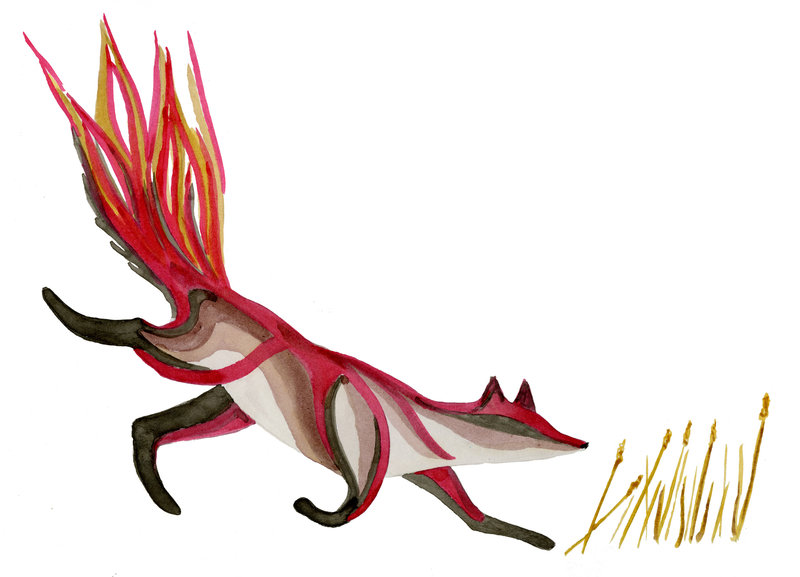
Aesops Fables with a Twist: The Farmer and the Fox


Aesop’s Fables are well loved the world over for their entertainment value and moral education. Here Sydney Solis adapts The Farmer and the Fox into a yoga story perfect for kids yoga classes. See also The Lion and the Mouse from last week.

From Sydney Solis of Storytime Yoga – See original post Mercy or Revenge? Aesop Stories and Yoga for Children

There was once a farmer who had a large wheat farm. One day he discovered that a fox had been eating some of his chickens. Furious, he vowed revenge. “I’ll get that fox!”

The farmer finally caught the fox.  ”Now you will pay for what you did to me!’ He soaked a rope in oil, tied it to the fox’s tail and set it on fire. The fox was aflame, but it squirmed and broke lose. It ran from the farmer and dashed into the wheat fields that were ready for harvest. All of the farmer’s wheat fields caught fire, destroying his farm and all of his crops.

Yoga Asana:

Who is this story about?

Farmer: Warrior Ivirabrhadrasana I, II and III

Fox: Downward dogadho mukha svanasana

What happens in this story?

Fire: Bound angle pose, baddha konasana

How does the story end?

Running through the fields on fire – Upward facing bow pose, urdva dhanurasana – then rolling side to side, spreading fire as you roll. Then run around the room!

Shavasana and Meditation:

See the farmer in your mind’s eye. See the fox. Think of someone that has harmed you and who bothers you. Smile at that person. Send love and forgiveness.

Discussion:

How are you like the farmer? Have you ever been angry about something someone did? What happened? What did you do? What was the outcome? How would you change what you did? How are you like the fox? Was there a time when you harmed another? What happened? What did you do to make amends for what you did? Is it ever too late to apologize or forgive? Does two wrongs make a right?

Think of a time when you were angry. Where do you feel the anger in your body? In your belly? Heart? Touch that spot. What is the emotion behind the anger? Were you shamed, afraid, betrayed?

How can we deal with the anger we may feel when we are wronged?

  • Breathe
  • Take a time out
  • Talk about it with someone

For older children and teens: Contemplate and discuss the following quotes:

  • “An eye for an eye will make the whole world blind.” – Ghandi
  • “Mercy is setting the prisoner free only to discover the prisoner was me.”
  • “In taking revenge, a man is but even with his enemy; but in passing it over he is his superior.” – Sir Francis Bacon.
  • “If you are slapped on one check, turn the other too.” The Bible Matthew 5:43
  • I mount the loss of thousands of precious lives, but I will not rejoice in the death of one, not even an enemy.” – Martin Luther King, Jr.

Affirmation:

  • I am peace in every step. I am peace in every breath. I am peace.

If you enjoyed this post and are looking for more check out Yoga for Literacy and the Language Arts Page. Be sure to subscribe (RSS or e-mail) or sign up for our newsletter to receive updates on this topic.

2 people like this post.

Posted in benefits, creative, curriculum applications, kids yoga, teens yoga, yoga in schoolComments (2)

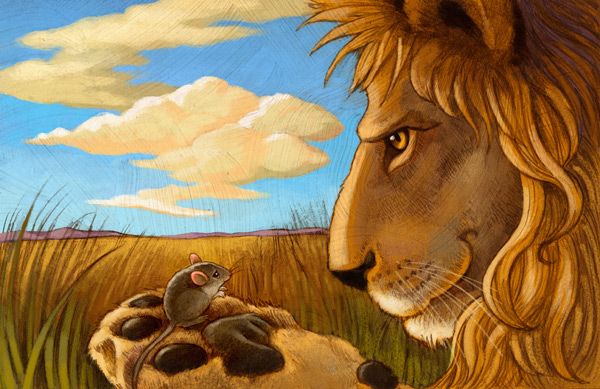
Aesops Fables with a Twist: The Lion and the Mouse

Aesop’s Fables are well loved the world over for their entertainment value and moral education. Here Sydney Solis adapts The Lion and the Mouse into a yoga story perfect for kids yoga classes. Watch next week for The Farmer and the Fox.

As told by Sydney Solis of Storytime Yoga – See original post Mercy or Revenge? Aesop Stories and Yoga for Children

Once upon a time there was a great lion.  Roaming in the jungle, he spotted a tiny mouse and pounced on it. “Ah ha! I have caught you!” The lion roared. “Now I will have a tasty snack!”

The little mouse shook in fear, but found the courage to say, “Lion, please, I beg you. Do not eat me. If you spare my life, I promise to return the favor and help you one day.”

“Ha! How can such a little mouse do anything important for such a great creature as I? I’m hungry!” And he lifted the mouse up by its tail and opened his great jaws wide.

“Please! I am sure I can help you one day! Give me a chance. Such a great creature as you surely has the power to spare some one his life!”

“All right. I will let you free,” the lion said, and went to sleep under a tree.

The next day, the mouse met the lion again, but  this time the lion was caught in a net from a trap that hunters had set for him. The Lion looked at the mouse with sad eyes and said, “Dear friend, can you help me?

And the little mouse looked at this great beast trapped and helpless. Then the mouse said, “Of course!” And went to work gnawing the ropes with his teeth and setting the lion free.

Yoga Asana:

Who is this story about?

LionLion posesimhasana, – roar like a lion, the great courageous and powerful creature that you are.

MouseChild posebalasana, – then squat, bring hands to chest like a mouse and walk around squeaking. No matter how small you are, you are capable of big things!

What happens in this story?

Net – Upward facing bow pose, urdva dhanurasana, or upward boat, urdva navasana, The trap of pride, fear, anger, hatred and revenge.

Gnawing – Opening and closing mouth wide, exaggerating chewing motions, puckering mouth to exercise the muscles of the face.

What is the benefit of showing mercy?

An Open and Free Heart , Peace and Freedom- Camel pose, - ustrasana

Shavasana and Meditation:

Visualize a lion in side your heart. See its radiant, golden mane. Feel its strength, courage and power. The lion’s power comes from his peaceful abiding. He knows that his strength and power comes from divine goodness, forgiveness and love. He does not harm others but grants them mercy and freedom instead.

See a little mouse inside your heart. Know that that little mouse is capable of great things – kindness, intelligence, quick-thinking. Nothing is ever too small to be of no importance. Know that you are important. Practice acts of kindness small and large.

Discussion:

How are you like the lion? Have you ever had the opportunity to have power over another? What did you do?

How are you like the mouse? Have you ever been bullied or threatened by someone bigger and more powerful than yourself? What did you do?

What do you think would have happened if the lion ate the mouse instead of freeing it? How would that have affected the lion’s ability to be freed from the net?

Make a list of creatures in your life that are small and helpless. How do you treat your pet, baby sister or the spider in the bathtub? How does remembering the way you treated them make you feel? Happy? Proud? Ashamed?

How can we treat others who are different from us in looks, clothing, language, religion and nationality with respect and dignity?

Look at your body. Every human being has the same fingers, toes, bones, ligaments, organs and muscles.

Affirmation:

  • I use my power for love and mercy toward all creatures in the world.
  • I treat others as I wish to be treated.

If you enjoyed this post and are looking for more check out Yoga for Literacy and the Language Arts Page. Be sure to subscribe (RSS or e-mail) or sign up for our newsletter to receive updates on this topic.

3 people like this post.

Posted in benefits, creative, curriculum applications, kids yoga, yoga in schoolComments (3)

Follow Yoga In My School

Categories

Top Yoga Blog